How Does a Vascular and General Surgeon Become the Inventor Of Digital Video Laryngoscopy?
In the late 1990s, medicine was on the edge of a technological shift. The belief was simple but powerful: the future would belong to those who could turn ideas into reality.
For a Vascular and General surgeon, that meant going beyond the operating room. It meant inventing.
In 1998, together with engineer Awni Ayoubi, Saturn Biomedical Systems was founded. The goal was ambitious—to bring video technology into surgery in a way that had never been done before. At the time, surgeons could create space with retractors, but they still operated in shadows.
The question was:
What if you could see clearly where no one had seen before?
The first concept was deceptively simple—a video-enabled surgical retractor.
Its purpose was to illuminate and visualize the most difficult anatomical spaces: deep within the pelvis, behind the sternum in the mediastinum—areas where light struggled to reach and vision was limited.
This idea wasn’t just about improving tools. It was about changing perception.
Seeing better meant operating better.
But the real breakthrough hadn’t happened yet.
The Eureka Moment that Changed Everything
It came unexpectedly, not in a lab—but in a moment of urgency.
Two experienced anesthesiologists were struggling with a difficult airway. Minutes passed. Then more minutes. Nearly half an hour passed during a tense, high-stakes effort to intubate a patient.
The room was heavy with pressure.
Watching this unfold sparked a realization:
Why are we still trying to see blindly?
The solution was suddenly obvious.
The same concept designed for surgery—bringing a camera and light into hidden spaces—could be applied to airway management.
In that instant, the path forward became clear.
The Inventor’s Basement Lab.
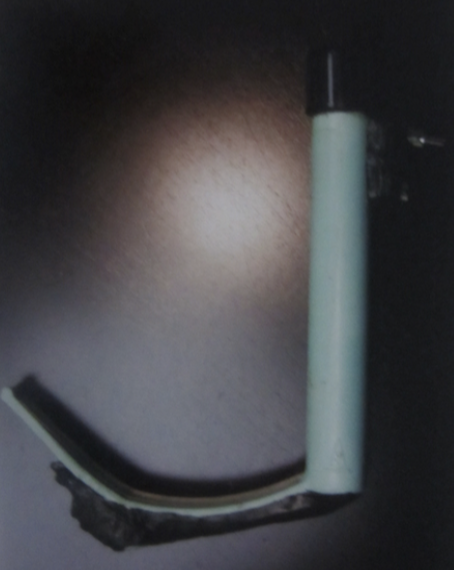
The First Digital Highly Angled Video Laryngoscope was constructed using a blade created in the “Polio Era,” circa 1950.
Disposable Laryngoscope blade with a CMOS security camera and Blue /Red LEDs * epoxied into the point of angulation of a high-angle modification of the Blade. The camera positioned away from the blade tip provides a surgical-type panoramic view.
*White light LEDs were not commercially available in 1999.

Reimagining the Laryngoscope
It drew inspiration from a polio blade, combined with a miniature digital camera enhanced by LED lighting. But the real insight came from studying the anatomy in a new way.
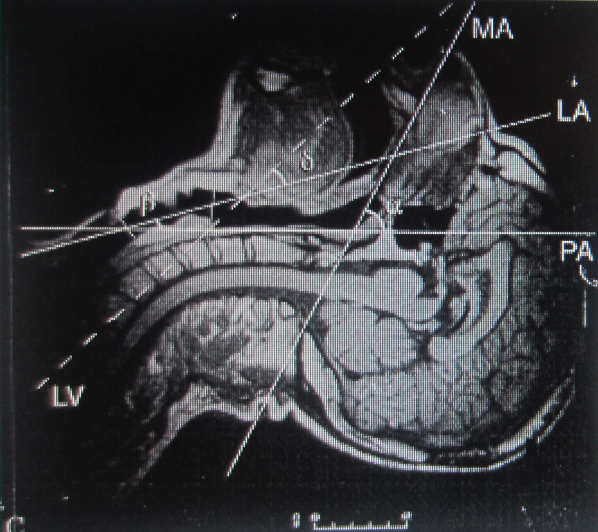
Using MRI imaging of the neck, a critical idea emerged:
Place the camera at what became known as the “60 degree alpha angle”.
Position it far enough back to create a “wide, panoramic view” used by surgeons.
Flood the airway with “light to remove uncertainty”.
Instead of forcing a direct line of sight, the device would create its own view.
This was the birth of a new category: digital video laryngoscopy.
When Challenges Become Catalysts
The journey was not without setbacks
In 2003, the Canadian medical regulators decided that those startups were required to get 13485 Certification immediately. Saturn Biomedical's business came to a complete halt for 3 months, threatening its financial viability.
Later, the FDA demanded that Verathon stop selling our "Blue" plastic blades because the cleaning standards had changed. Confidence was tested.
From Innovation to Impact
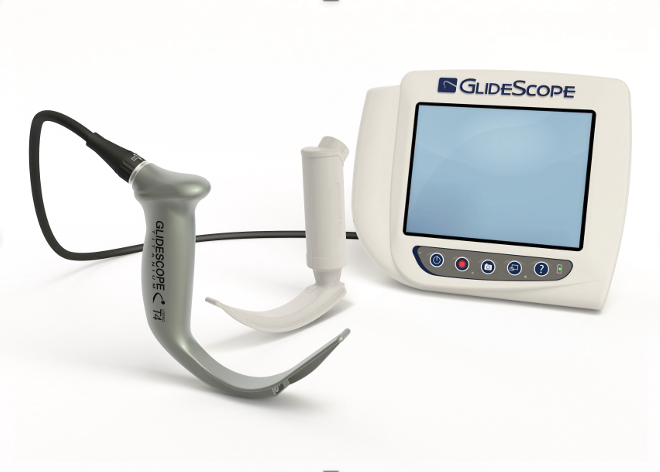
As the technology matured, the GlideScope evolved through multiple generations—each one customized for pediatrics, obesity, emergency medical service, disposables, and military.
Then came a new challenge from the United States Air Force:
USAF needed a custom device that could perform anywhere as a component of the newly designed modular transportable field hospital created at Fort Detrick, Maryland.
The result was the GlideScope Ranger:
Lightweight and portable
Waterproof and rugged
Built to float, endure, and perform under pressure
Airworthiness Certified for use in flight
It would go on to serve in Iraq, Afghanistan, and even aboard Air Force One.
What began as an idea in an operating room was now saving lives across the world.
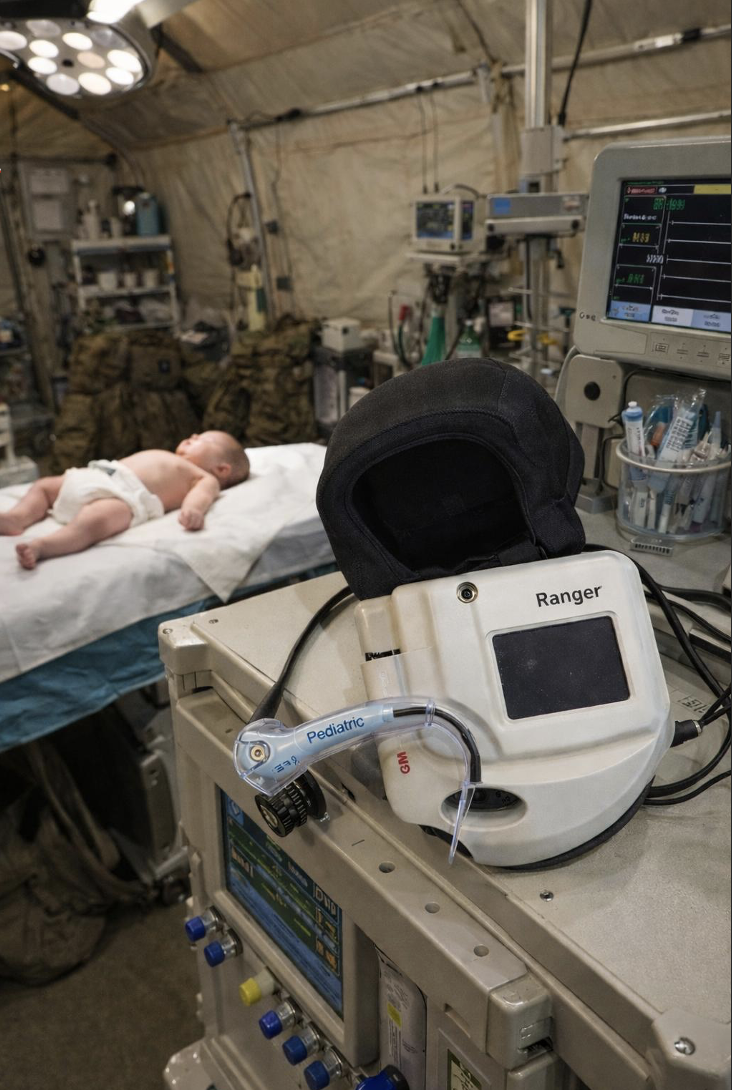
Image gnerated using Chat GPT
A Platform for Continuous Innovation
The story did not end with a single device.
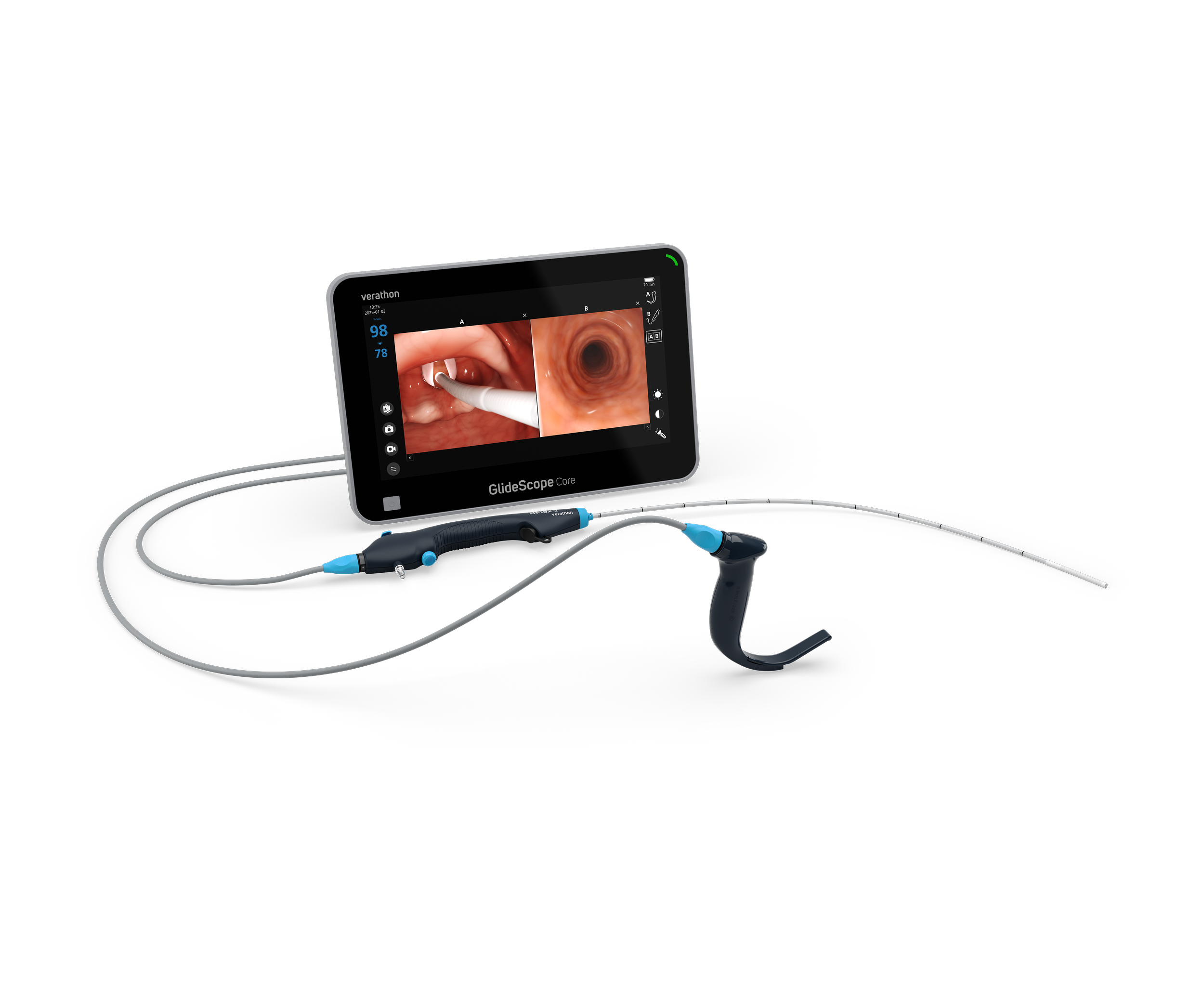
With the development of the GlideScope Core, innovation became ongoing—
This advancement traced back to an original insight: Combine benefits of Flexible and Rigid laryngoscopy on one Display screen.
If you can see better, you can do better.
The Mindset Behind the Glidescope
At its core, the making of the GlideScope is not just a story of invention—it is a story of perspective.
Seeing problems as opportunities
Bridging disciplines—medicine and engineering
Challenging assumptions about what is possible
Acting decisively when insight strikes
It is the story of recognizing that sometimes, the biggest breakthroughs come not from new knowledge, but from seeing old problems in a completely new way.
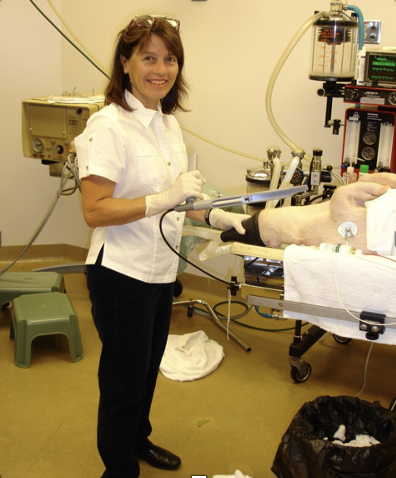
Mentor: Doris Pacey RN
From a Single Moment to Global Standard 2013 ASA difficult airway algorithm.
What began with a question in a moment of crisis became a transformation in difficult airway management.
Today, the GlideScope digital video laryngoscopy is supported by more than 30 variants produced by the great team at Verathon Medical Canada.
It all started with a decision to pivot from a surgical retraction prototype to develop a highly angled retractor, leveraging core technology from the field of anesthesia.